


Logo PWr Logo PSSI Logo UEW

Sympozjum Polskiego Stowarzyszenia
Sztucznej Inteligencji

Wrocław, 11-12 września 2025

Po Sympozjum

Szanowni Państwo, serdecznie zapraszamy na Sympozjum Polskiego Stowarzyszenia Sztucznej Inteligencji. Celem Sympozjum jest wymiana doświadczeń w zakresie rozwoju sztucznej inteligencji oraz integracja środowiska sztucznej inteligencji w Polsce.

Lokalizacja: Uniwersytet Ekonomiczny we Wrocławiu (11 września 2025), Politechnika Wrocławska (12 września 2025).

Program Szczegółowy

Pobierz PDF z programem szczegółowym.

Program Ramowy

Dzień 1: 11 września 2025
Uniwersytet Ekonomiczny we Wrocławiu, budynek P sala 1, Komandorska 118/120, 53-345 Wrocław

10:30-11:00 Rejestracja, kawa, networking
11:00-13:00 Otwarcie Sympozjum (powitanie, wręczenie nagród za najlepszy doktorat w zakresie sztucznej inteligencji, prezentacje laureatów, wystąpienia członków wspierających PSSI, Sponsorów).
13:00-13:30 Przerwa kawowa
13:30-14:30 Wykład plenarny: Prof. Sašo Džeroski, Jozef Stefan Institute, Slovenia
14:30-15:30 Obiad
15:30-16:15 Dyskusja nad misją PSSI
16:15-17:15 Walne zebranie członków PSSI
17:15-18:00 Spotkanie Zarządu i Rady Naukowej PSSI
18:30 Kolacja

W godzinach 16:15-18:30 będzie możliwość wizyty w innowacyjnym Centrum Symulacji Procesów Biznesowych, które znajduje się na terenie kampusu Uniwersytetu Ekonomicznego we Wrocławiu.

Dzień 2: 12 września 2025
Politechnika Wrocławska, budynek H-14 Sala Dziekańska, wybrzeże Stanisława Wyspiańskiego 40, 50-370 Wrocław

9:00-9:15 Rejestracja, kawa, networking
9:15-9:30 Powitanie uczestników na Politechnice Wrocławskiej
9:30-10:30 Wykład zaproszony: Prof. Katarzyna Kaczmarek-Majer, IBS PAN
10:30-11:45 Prezentacje wybranych artykułów przyjętych na ECAI 2025
11:45-12:15 Przerwa kawowa
12:15-14:15 Warsztaty dla doktorantów i młodych naukowców
14:15-14:30 Zakończenie Sympozjum

Prezentujący

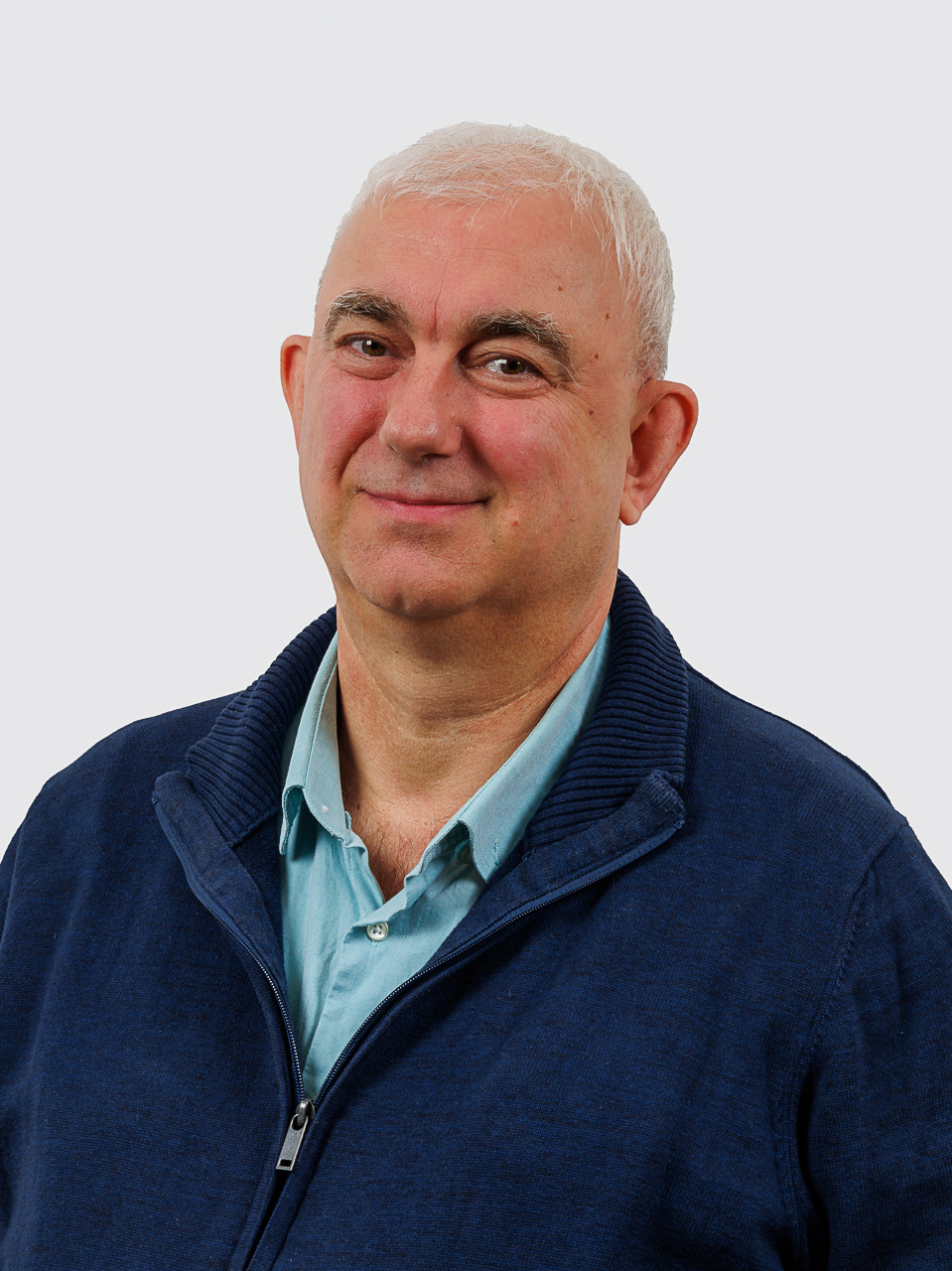
Prof. Sašo Džeroski

Prof. Sašo Džeroski
Jozef Stefan Institute, Slovenia

Sašo Džeroski is Head of the Department of knowledge technologies at the Jozef Stefan Institute and full professor at the Jozef Stefan International Postgraduate School, both in Ljubljana, Slovenia. He is a fellow of EurAI, the European Association of AI, in recognition of his "Pioneering Work in the field of AI”. He is a member of the Macedonian Academy of Sciences and Arts and a member of Academia Europea. He is past president and current vice-president of SLAIS, the Slovenian Artificial Intelligence Society.
His research interests focus on explainable machine learning, computational scientific discovery, and semantic technologies, all in the context of artificial intelligence for science. His group has developed machine learning methods that learn explainable models from complex data in the presence of domain knowledge: These include methods for multi-target prediction, semi-supervised and relational learning, and learning from data streams, as well as automated modelling of dynamical systems. The developed methods, released in open-source software, have been used to solve important problems in science and society, including agriculture and environmental sciences, medicine and life sciences, physics and material sciences, and space operations/ Earth observation.
Professor Džeroski has lead (as coordinator) many national and international (EU-funded ) projects and has participated in many more. He currently leads a large national project titled "Artificial Intelligence for Science". He is also the technical coordinator of the Slovenian Artificial Intelligence Factory. The work of professor Džeroski has been extensively published and is highly cited: With more than 26500 citations and an h-index of 76 (in the GoogleScholar database), prof. Džeroski is the most frequently cited computer scientist in Slovenia (according to the 2025 ranking by Research.com).

Artificial Intelligence for Science and Society: From Innovation to Infrastructure

Artificial Intelligence (AI) has moved from being a niche research curiosity to becoming an indispensable component of modern science and a foundational element of digital infrastructure. In science, AI already drives discovery and innovation, accelerating progress in fields from environmental modelling to life sciences and materials research. In society, it increasingly operates as an enabling infrastructure—supporting research, innovation, and public services at national and international scales.
The lecture will explore two interrelated perspectives on AI’s role in the immediate future. First, I will give an overview of our work in developing AI methods specifically suited for scientific discovery. These include approaches for explainable machine learning—covering multi-target prediction, relational learning, and interpretable modelling of complex dynamical systems—that balance predictive accuracy with scientific insight. I will also discuss strategies for learning from limited data, including semi-supervised learning and foundation models, which extend AI’s reach to data-scarce domains. Finally, I will highlight the role of ontologies and semantic technologies in supporting open, reproducible science by formalising and sharing scientific knowledge, data, and computational artefacts.
Second, I will discuss AI as a national-scale infrastructure through the lens of the Slovenian AI Factory (SLAIF), which I coordinate technically. SLAIF will provide computing resources, tools, and expertise to a wide spectrum of users—from researchers to public institutions and industry—lowering barriers to AI adoption and fostering a vibrant, inclusive AI ecosystem. By integrating AI into the very fabric of scientific and societal operations, we are moving towards a future where AI is as essential and ubiquitous as electricity or the internet.
I will argue that the transition from AI as innovation to AI as infrastructure is not just a technological evolution. It is a societal transformation. As such, it requires thoughtful design, broad accessibility, and deep collaboration between science, policy, and practice.

Prof. Katarzyna Kaczmarek-Majer

Prof. Katarzyna Kaczmarek-Majer
Systems Research Institute
Polish Academy of Sciences, Poland

Katarzyna Kaczmarek-Majer is an Associate Professor in the Department of Stochastic Methods at the Systems Research Institute of the Polish Academy of Sciences. She is the Principal Investigator of the project ExplainMe: Explainable Artificial Intelligence for Monitoring Acoustic Features Extracted from Speech and leads the Trustworthy AI for Healthcare Lab. She is also involved in the Research of Excellence on Digital Technologies and Wellbeing (DigiWell), affiliated with the Institute for Research and Applications of Fuzzy Modeling at the University of Ostrava, Czech Republic.
Katarzyna holds dual M.Sc. degrees in Mathematics and Computer Science from the University of Poznań, as well as a Ph.D. in Computer Science (with distinction) from the Systems Research Institute of the Polish Academy of Sciences in Warsaw.
Her areas of expertise include explainable and trustworthy artificial intelligence, fuzzy sets and systems, approximate reasoning, and computational statistics. Her current research interests focus on medical data stream analysis enhanced with fuzzy linguistic summarization.
Katarzyna has co-authored over 50 scientific publications, several of which have received Best Paper Awards at international conferences—such as FUZZ-IEEE 2022 in Padova, Italy, for the article "Confidence Path Regularization for Handling Label Uncertainty in Semi-Supervised Learning: Use Case in Bipolar Disorder Monitoring." She has participated as a scientific committee member at more than 20 conferences and regularly contributes as a reviewer for over 15 scientific journals.

Co-design of a trustworthy AI-driven voice-based system in mental health monitoring

Recent research confirms that acoustic features extracted from speech are valid markers for assessing the severity of manic and depressive symptoms. At the same time, while numerous applications arise to support the monitoring of individuals with affective disorders, these systems typically do not provide explanations for their reasoning or decisions.
To address this gap, we design an explainable AI-driven, voice-based system for mental health monitoring aiming at generating explanations regarding how a person's voice speaking has changed across different affective states. The co-design process has been conducted by an interdisciplinary team of experts and stakeholders comprising engineers, technical experts, psychiatrists, legal scholars, ethicists, philosophers, and other specialists. The trustworthiness of the proposed AI system is evaluated using the Z-Inspection® methodology. This methodology involves investigation of the relevant ethical standards in the development, implementation and use of artificial intelligence systems intelligence and also consideration of the socio-technical context in which the system will be used. During the presentation, we will share insights and lessons learned from the trustworthiness assessment and co-design process of the proposed system.
Next, we will address key challenges related to the construction of linguistic summaries as explanations in evolving environments, as well as their validation. The overall aim is to deliver human-consistent information granules that describe in natural language large datasets, including inhomogeneous time series. We consider how recent developments in the theory of evaluative linguistic expressions and fuzzy association rule mining can complement summarization. We will briefly recall related work on the evaluation criteria for the quality of both individual sentences as well as group of sentences. The assessment of the quality of the groups or sequences of summaries becomes even more complex for real-world scenarios in which additional data becomes available over time or the existing information is incomplete.
The talk will conclude with some practical examples from the remote smartphone-based mental health monitoring system, which aims to support doctors and patients in monitoring affective episodes and fuzzy information granules will be its core component.

Warsztaty dla doktorantów i młodych naukowców

Pierwsza część warsztatów dotyczyć będzie zagadnienia sterowania niezależnymi agentami w środowiskach symulacyjnych i grach. Piotr Biczyk, przedstawiciel zespołu badawczego i firmy Grail Team, przedstawi drogę jaką przeszedł wraz z zespołem podążając za celem stworzenia wiarygodnego systemu podejmowania decyzji przez agentów. Omówione zostanie zderzenie pierwotnych założeń badawczych z twardą rzeczywistością i potrzebami użytkowników, i jak można sobie w takich sytuacjach radzić.

Druga część warsztatów to dyskusja młodych naukowców z doświadczonymi mentorami. Temat przewodni: Badania naukowe – wzloty i upadki.

Opłata za Udział

Opłata za udział w sympozjum: 400 zł. Pokrywa m.in. koszty przerw kawowych, obiadu i kolacji. Członkowie PSSI są zwolnieni z opłat. Udział w drugim dniu Sympozjum dla doktorantów i doktorów do trzech lat po doktoracie jest bezpłatny (koszty noclegów uczestnicy pokrywają we własnym zakresie).

W sprawach opłat, w tym w sprawie faktur, należy kontaktować się emailowo z prof. Dominikiem Ślęzakiem: slezak@mimuw.edu.pl.

Rejestracja na Sympozjum zakończyła się.


Zakwaterowanie

Rekomendowane hotele:

Komitet Organizacyjny

prof. dr hab. inż. Ngoc Thanh Nguyen

dr hab. inż. Marcin Hernes, prof. UEW

dr inż. Ewa Walaszczyk

dr inż. Agata Kozina

dr inż. Krzysztof Lutosławski

dr hab. inż. Dariusz Król, prof. uczelni

dr hab. inż. Adrianna Kozierkiewicz, prof. uczelni

dr inż. Marek Kopel

mgr Katarzyna Zombroń

Oferta dla sponsorów

Oferta dla sponsorów obejmuje:

Opłata: 1500 zł.

Dodatkowa opłata za stoisko Sponsora podczas Sympozjum: 500 zł.

Kontakt

Email: sympozjum.pssi@gmail.com